
Faustino Oro is one of the most talked-about young players in world chess today. Born in Argentina in 2013, he rose from a child learning chess during the pandemic to one of the strongest prodigies in the game. In a very short time, he became the youngest International Master in history, defeated Magnus Carlsen in an online bullet game, crossed the 2500 FIDE rating mark, and came close to breaking the all-time record for the youngest Grandmaster ever.
For parents, coaches, and young chess learners, Faustino Oro’s journey is exciting for one simple reason: it shows what can happen when natural talent is supported by serious training, strong family backing, and a real love for the game. His rise is not just a story about records. It is also a story about discipline, learning speed, confidence, and long-term development.
Faustino Oro Quick Facts
| Category | Details |
|---|---|
| Full Name | Faustino Oro |
| Country | Argentina |
| Birth Year | 2013 |
| FIDE Title | International Master |
| Known For | Youngest International Master in history |
| Famous Nickname | “Messi of Chess” |
| Major Viral Moment | Defeated Magnus Carlsen in an online bullet game in March 2024 |
| Key Milestone | Crossed 2500 FIDE rating and earned first GM norm in 2025 |
| Big 2026 Story | Came close to becoming the youngest Grandmaster ever at the Aeroflot Open |
Who Is Faustino Oro?
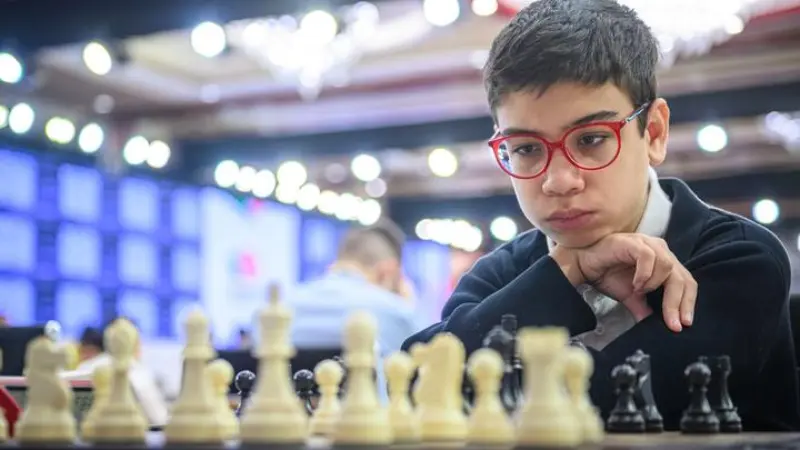
Faustino Oro is an Argentinian chess prodigy who became globally famous because of how quickly he improved at a very young age. He is part of a new generation of young players who have grown up with online chess classes, digital training tools, and constant access to high-level games. But what makes him stand out is not only the speed of progress. It is the quality of his play.
He has been praised not just for tactical sharpness, but also for composure, endgame skill, and positional understanding far beyond his age. That is one reason why many people in the chess world see him as a serious long-term talent rather than just an internet sensation.
Why Is Faustino Oro Called the “Messi of Chess”?
The nickname “Messi of Chess” comes mainly from two things. First, Faustino is from Argentina, the home country of Lionel Messi.
Second, like Messi in football, Faustino is seen as a rare young talent with extraordinary natural ability and game sense. Major media outlets and chess coverage have repeatedly used this nickname while covering his rise.
How Faustino Oro Started Chess
Faustino Oro learned chess during the COVID-19 lockdown period, when many children around the world were exploring online activities. What started as a home-based learning activity quickly turned into something much bigger. He improved at an exceptional pace and soon became known in youth chess circles for breaking age-based rating marks and collecting title norms very early.
Early Rating Records and Breakthrough
Before becoming an International Master, Faustino Oro had already made headlines for breaking age-related rating records. Chess.com describes him as the youngest player ever to achieve a 2300 FIDE rating, and major media coverage in 2024 highlighted how quickly he was collecting IM norms and climbing the rating ladder.
In June 2024, he completed one of the biggest milestones of his young career: becoming the youngest-ever International Master. According to Chess.com, he achieved the title at 10 years old, beating the previous record and becoming one of only a few players ever to earn the IM title before turning 11.
That was the moment when Faustino moved from “promising child player” to “historic chess talent.”
Major Career Milestones
| Year / Date | Milestone | Why It Matters |
|---|---|---|
| 2023 | Reached major FIDE age-rating records, including becoming the youngest player to hit 2300 FIDE | Showed that his progress was historic even before his IM title |
| March 2024 | Defeated Magnus Carlsen in a Chess.com Bullet Brawl game | Brought him massive global attention beyond the usual chess audience |
| June 2024 | Became the youngest International Master in history | One of the most important records in junior chess |
| September 2025 | Won Legends & Prodigies in Madrid, earned first GM norm, crossed 2500 | Proved he was now genuinely in the grandmaster race |
| December 2025 | Earned second GM norm at Magistral Szmetan-Giardelli | Moved within one norm of the GM title |
| March 2026 | Went to Aeroflot Open needing one final GM norm to break the youngest GM record | Came very close, but fell short in the last round |
The Famous Win Against Magnus Carlsen

One of the most viral moments of Faustino Oro’s career came in March 2024, when he defeated Magnus Carlsen in an online bullet game during Chess.com’s Bullet Brawl. This was a one-minute game, so it should not be confused with a classical tournament result. Still, it was a huge moment because Carlsen is one of the greatest players in chess history, and the clip spread widely across chess media and social media.
This result mattered for two reasons.
First, it introduced Faustino to a much larger audience. Many people who had never followed junior chess suddenly knew his name.
Second, it showed that he had the speed, courage, and tactical awareness to compete in ultra-fast formats against elite players. Even though bullet chess is chaotic and highly tactical, beating Carlsen at any level is still a headline-worthy achievement for a 10-year-old.
Becoming the Youngest International Master in History
In June 2024, Faustino Oro became the youngest player ever to earn the International Master title. That achievement alone would make most junior careers memorable. But in his case, it felt like only the beginning.
According to Chess.com, he secured the final IM norm in Barcelona and set the new age record. This was one of the strongest signals yet that he was not simply having a hot streak. He was building a historic junior résumé.
For a young chess player, the IM title is already a major achievement. Reaching it before turning 11 is extraordinarily rare.
The Road to the Grandmaster Title
To become a Grandmaster, a player needs two main things: a 2500 FIDE rating and three GM norms earned in qualifying events. In September 2025, Faustino made a huge leap forward by winning the Legends & Prodigies event in Madrid with an unbeaten 7.5/9, securing his first GM norm, and crossing the 2500 rating barrier. ChessBase and Chess.com both reported the milestone, and ChessBase noted that with that result he moved into serious youngest-GM-record territory.
| Requirement / Event | Tournament / Stage | Date | Result |
|---|---|---|---|
| Rating Milestone | Official rating rise above 2500 after Legends & Prodigies | 2025 | Crossed 2500 FIDE threshold |
| GM Norm #1 | Legends & Prodigies, Madrid | September 2025 | 7.5/9, undefeated, first GM norm |
| GM Norm #2 | Magistral Szmetan-Giardelli, Buenos Aires | December 2025 | 5.5/9, 2608 performance rating, second GM norm |
| Final Record Attempt | Aeroflot Open, Moscow | March 2026 | Needed final GM norm to break record, but lost final-round chance |
Second GM Norm and More Proof of Strength
In December 2025, Faustino earned his second GM norm at the Magistral Szmetan-Giardelli event in Buenos Aires. Chess.com reported that he scored 5.5/9, finished on the same score as some elite names, and produced a 2608 performance rating, which was enough for the norm.
Aeroflot Open 2026
By March 2026, Faustino Oro had already crossed 2500 and secured two GM norms. That meant he entered the Aeroflot Open in Moscow needing just one final GM norm to become the youngest Grandmaster in history, breaking the record held by Abhimanyu Mishra. ChessBase previewed the event by noting that, based on his birth date, Oro needed to complete the norm before March 11, 2026 to set the new record.
The task was extremely difficult. The Aeroflot Open field was strong, and the margin for error was tiny. Chess.com reported on March 10, 2026 that Oro came within one victory of making history before losing in the final round, which ended the record attempt. Even so, the article noted that he gained rating points and remained confident about becoming a Grandmaster soon.
This is actually a very important part of his story. Missing the record does not make the run any less impressive. It shows how close he already is to one of the biggest milestones in chess.
World Cup Achievement
Another sign of Faustino’s growing level came at the 2025 FIDE World Cup, where Chess.com reported that he was the youngest participant and advanced through tiebreaks after defeating GM Ante Brkic. That kind of performance on a major world stage adds more weight to his profile as a genuine elite junior.
This matters for rankings too, because readers searching for a biography often want to know not only “who is he?” but also “what has he actually done at big events?”
What Makes Faustino Oro Special as a Player?

Faustino Oro’s appeal is not built only on age records. Plenty of strong children attract attention for a short time. What gives him staying power is the way he plays.
Reports and profile coverage point to a player who is comfortable in tactical chaos, but also capable in positional play and endgames. That balance is rare in very young players. It is also one reason why many coaches and commentators see him as a likely future Grandmaster and possibly much more.
For young learners, this is a useful lesson. Real chess improvement is not just about trick moves or quick attacks. It is about understanding positions, calculating carefully, staying calm, and making better decisions over time.
What Parents Can Learn from Faustino Oro’s Journey
Faustino Oro’s story is inspiring, but it should also be understood correctly.
The lesson is not that every child will become a prodigy.
The real lesson is that children grow best when they have:
- Genuine interest in the activity
- Structured Chess Coaching
- Regular practice
- Tournament exposure
- Patient support from parents
His journey also reminds families that chess can build much more than playing strength. It can support concentration, patience, discipline, emotional control, and problem-solving. That is why so many parents today are exploring online chess classes, guided training, and structured chess programs for children.
Frequently Asked Questions
Faustino Oro is a young chess player from Argentina who is considered one of the brightest chess prodigies in the world. He became famous for his rapid rise, record-breaking achievements, and strong performances against top players.
Faustino Oro is called the “Messi of Chess” because he is from Argentina and is seen as an exceptional young talent, much like Lionel Messi in football. The nickname reflects both his nationality and his extraordinary promise in the chess world.
Faustino Oro became the youngest International Master in history in 2024, when he was just 10 years old. This made him one of the most talked-about young players in global chess.
Yes, Faustino Oro defeated Magnus Carlsen in an online bullet game in 2024. While it was a very fast time-control game and not a classical match, the win still became a huge talking point in the chess world.
Faustino Oro stands out because of his speed of improvement, strong tactical skills, calm decision-making, and maturity in difficult positions. Experts believe he is more than just a talented child player and could become one of the leading chess stars of the future.
Faustino Oro started learning chess during the COVID-19 lockdown. In a short time, he improved quickly and began breaking records, which made him a global name in junior chess.
As of now, Faustino Oro has not yet completed the Grandmaster title, but he has already crossed the 2500 FIDE rating mark and earned multiple GM norms. He is considered very close to reaching the Grandmaster level.
Children can learn that success in chess comes from regular practice, good coaching, patience, and love for the game. Faustino’s story shows that talent matters, but discipline and consistent learning matter just as much.
Parents can see that chess can help children build focus, patience, confidence, and problem-solving skills. Faustino Oro’s journey also shows the value of a supportive environment and structured chess training.
Final Thoughts
Faustino Oro is already one of the most important young names in chess. He became the youngest International Master ever, defeated Magnus Carlsen in a viral online game, crossed 2500, collected two GM norms, and came within touching distance of the youngest-Grandmaster record. That is an extraordinary résumé for a player born in 2013.
Whether or not he breaks more age records from here, one thing is already clear: Faustino Oro is not just a rising child talent. He is one of the strongest symbols of where modern youth chess is heading.
For children, his story is motivating.
For parents, it is a reminder that with the right support, chess can become a serious path for learning, growth, and confidence.