
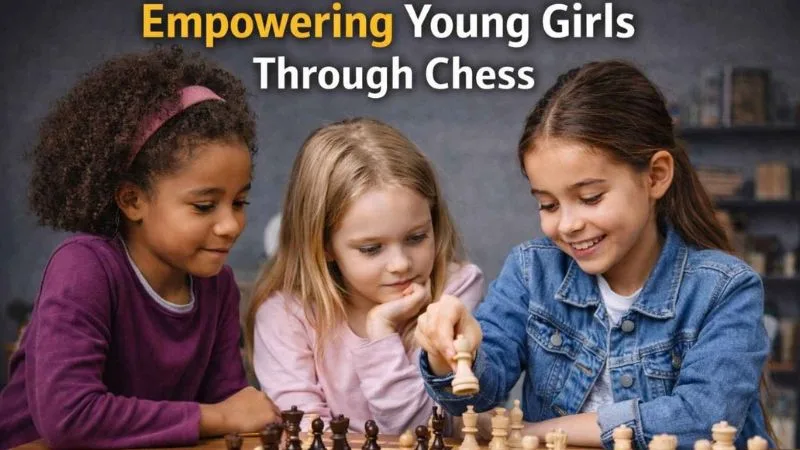
Empowering Young Girls Through Chess
Watching your child lose a chess game can be heartbreaking, especially when you see their confidence crumble into tears after a single wrong move. For a young girl, chess isn’t just a game; it is a personal test of her logic, and a loss can feel like a direct failure of her own thinking. However, these tough moments are actually where the real magic happens, as chess provides a safe space for children to practice managing big emotions and bouncing back from disappointment. By sticking with the game, the initial frustration gradually transforms into incredible patience and a “can-do” attitude that helps them tackle challenges far beyond the board. This journey through the sixty-four squares is one of the most powerful ways to build a child’s self-regulation and strategic thinking for life.
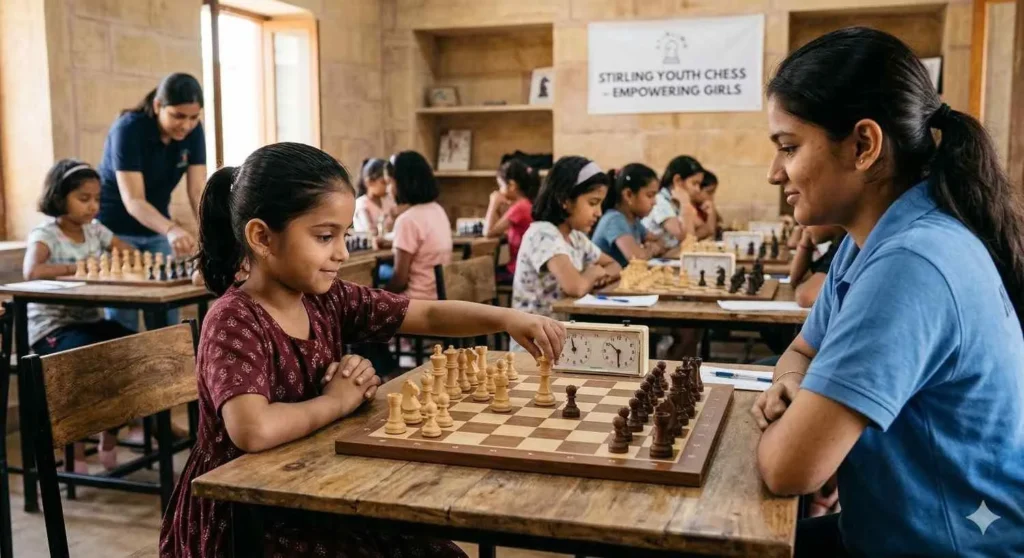
Why Patience Is an Important Skill for Children
In a world of instant digital rewards, chess teaches children the rare and vital skill of waiting. By forcing young minds to slow down and think before they act, the game builds “brain muscles” like impulse control and long-term planning. This patience helps kids stay calm during tough school exams or social stresses, replacing the urge to rush with a steady, methodical approach to solving problems.
However, the journey to mastering this focus isn’t always easy, and young girls often face unique emotional hurdles on the board. To help them stay confident, it is important for parents to recognize common challenges such as:
- Frustration after losing a long, intense game.
- Difficulty staying patient during slow-paced matches.
- Self-doubt from comparing themselves to more experienced players.
- Fear of making mistakes, which can make them play too cautiously.
Why Chess Is Especially Empowering for Girls
The chess world has traditionally been a “boys’ club,” which can sometimes make young girls feel like they don’t belong before they even make their first move. This isn’t about ability—girls are just as capable as boys—but rather about old stereotypes and a lack of female role models in the past. When parents or coaches accidentally hold lower expectations for girls, it can create a “stereotype threat,” making girls feel extra pressure and a fear of making mistakes.
However, the chessboard is the ultimate equalizer. It doesn’t care about your gender or size; it only cares about your strategy and focus. When a girl realizes she can outthink her opponent, it builds a “psychological armor” that helps her trust her own brilliance in all areas of life.
Breaking Barriers: Inspiring Role Models
Today, amazing young players are proving that the “gender gap” is disappearing:
- Bodhana Sivanandan: Made history by defeating a Grandmaster at just ten years old.
- Divya Deshmukh: Dominated the 2025 Women’s World Cup with world-class strategy.
- Michelle Zhang: Showed incredible resilience by taking one of the world’s top players to a grueling 65-move finish.
Creating a Supportive Space
To help girls thrive, the environment matters just as much as the game itself:
- All-Girl Clubs: Programs like “Chess Girls DC” provide a safe space where girls can focus on the game without social pressure.
- Visible Mentors: Seeing women succeed in championships shows young players that their potential is truly limitless.
- Focus on Effort: When we praise a girl’s tactical thinking rather than just her “natural talent,” her confidence sky-rockets.
How Chess Teaches Patience Naturally
Teaching a child to “be patient” is hard, but chess creates a “mental sandbox” where being patient is the only way to win. One of the best ways this happens is through the “Touch-Move” rule: if you touch a piece, you must move it. This simple rule acts as a speed bump for a child’s brain, forcing them to stop and think before their hand ever reaches for the board.
In the beginning, many young girls will make impulsive moves and lose a piece, leading to frustration. However, you will soon notice a brilliant shift—they start sitting on their hands or tucking them under their legs. This physical habit is the birth of self-regulation, as they learn to ask, “If I move here, what will my opponent do next?“
How Chess Builds Patience and Confidence
By playing regularly, children develop several life-changing habits:
- Thinking Before Acting: They learn to divorce their sudden impulses from their final decisions.
- Learning from Mistakes: They realize a lost game isn’t “bad luck” but a result of a specific choice they can improve next time.
- Strategic Planning: They practice “If-Then” logic, which is a massive leap in cognitive maturity.
- Long-term Consequences: They learn that grabbing a “free” piece now might lead to a trap later, favoring long-term safety over instant rewards.
The Power of Delayed Gratification
Chess teaches kids that the first move they see is rarely the best one. They learn to ignore the “quick thrill” of a capture and instead wait for the perfect moment to execute a plan. This build-up of mental endurance helps them stay calm under pressure—whether they are facing a tough attack on the board or a difficult math problem in school.
Skills Girls Develop Through Chess
Chess is far more than just a game; it acts like a high-intensity gym for a child’s brain. By playing regularly, kids don’t just learn to move pieces—they develop “mental muscles” like memory, pattern recognition, and logical thinking. This helps them look at a messy situation and quickly spot the underlying patterns, a skill that translates directly to solving tough math problems or understanding complex stories in school.
Research shows that chess actually speeds up the development of “executive functions”—the brain’s command center. These are the skills that help students stay focused during long exams, analyze science experiments, and stop themselves from acting on impulsive thoughts in the classroom.
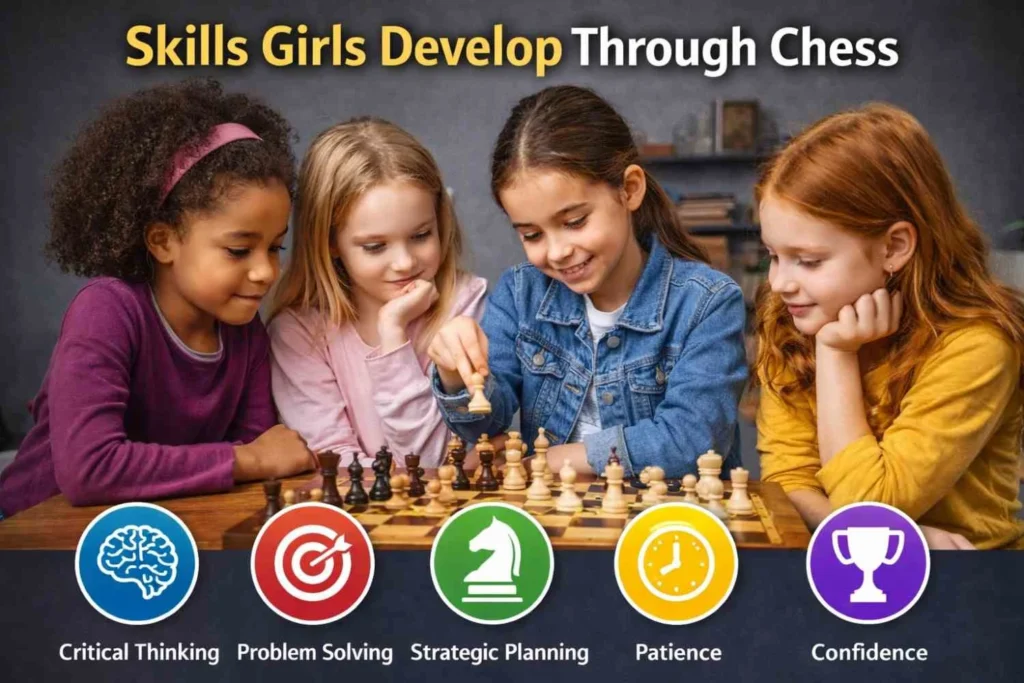
Key Skills Girls Develop Through Chess
Beyond the logic, the emotional growth found at the chessboard is truly life-changing:
- Patience and Emotional Control: Learning to stay calm even when a plan falls apart.
- Problem-Solving Ability: Viewing every setback as a puzzle that can be solved.
- Focus and Concentration: Training the mind to stay in “the zone” despite distractions.
- Strategic Thinking: Planning several steps ahead rather than just reacting to the moment.
- Resilience After Setbacks: Learning that a loss is just a lesson, not a reflection of their worth.
Building “Ironclad” Resilience
Because there is no “luck” in chess—no dice to roll or cards to flip—children learn to take full responsibility for their choices. While this can be tough at first, it builds incredible resilience. We see this in young players who might lose every game in their first tournament but come back weeks later sharper and more determined. Chess provides a safe space to fail, learn from the feedback, and try again immediately, proving that a “checkmate” is never the end of the road.
Practical Tips for Parents
Supporting your daughter’s chess journey is all about balancing the high-tech world of modern strategy with old-fashioned emotional support. It is easy for a fun hobby to feel like a high-pressure chore, so the most important job for a parent is to keep the game a “safe space.” When she loses, resist the urge to immediately point out her mistakes. Instead, validate her feelings by saying, “It’s frustrating to work so hard on a plan and have it not work out.”
Modeling resilience at home is one of the best teaching tools. During family game nights, try “thinking out loud” when you make a mistake. By saying something like, “Oops! I totally missed that move, what was I thinking?” in a lighthearted way, you show her that errors are just a normal part of learning, not a blow to her self-esteem.
Practical Ways to Encourage Your Young Chess Player
To help her grow without the stress, try these simple strategies:
- Celebrate Effort, Not Just Wins: Praise her for concentrating for a full hour or finding a tricky defensive move, regardless of the final result.
- The “Sit on Your Hands” Rule: At home, gently remind her to sit on her hands until she has asked herself, “What is my opponent trying to do?”
- Focus on the “Growth Mindset”: Remind her that playing against stronger players is how we get better—there is no shame in losing when you are “punching up.”
- Balanced Tech Use: While AI tools like Stockfish are great for analysis, make sure to balance screen time with games on a real, physical wooden board.
High-Tech Training in 2026
As we move through 2026, kids have access to incredible AI-powered coaches that show “heat maps” of the board and real-time tactical arrows. These are amazing for improvement, but they can’t replace a parent’s encouragement. Make “reviewing games” feel like a fun, collaborative detective mission rather than a math test. By focusing on the journey, you give her an intellectual tool that builds unshakeable confidence for life.
Conclusion
Ultimately, mastering chess isn’t about winning trophies or reaching a perfect rating; it’s about giving your child the mental toolkit to navigate a fast-paced, complex world. For young girls especially, the game is a powerful way to prove that their intellect is a genuine superpower. By pushing through the frustration of early losses and learning to control impulses, they build a quiet, unshakeable confidence. They learn that their decisions have real weight and that staying calm under pressure is the key to solving any problem, on or off the board. This journey connects directly to the central theme of “The 2026 Guide to Chess and Child Development,” showing that the chessboard is the ultimate training ground for a growing mind.
In our modern world of constant digital distractions and instant shortcuts, the “gift of the sixty-four squares” is actually the gift of a focused, independent mind. Every time a girl pauses to think before she moves, she is rewiring her brain to value long-term success over quick thrills. This journey teaches her to trust her own logic over her fears, providing a developmental victory that is far more valuable than any checkmate she will ever make.
Frequently Asked Questions (FAQs)
Chess empowers young girls by developing important life skills such as critical thinking, patience, decision-making, and confidence. Through regular practice, girls learn how to analyze situations, plan strategies, and solve problems independently.
Girls can develop several valuable skills through chess, including problem-solving, strategic thinking, concentration, and resilience. These skills help them perform better academically and build confidence in everyday challenges.
Girls can start learning chess as early as 5 or 6 years old. At this age, they can easily understand basic rules and gradually develop strategic thinking skills as they practice.
Many online platforms offer chess training for children. Programs like Kingdom of Chess provide structured online classes designed to help kids develop focus, strategic thinking, and problem-solving skills through interactive learning.
Yes, chess can support academic growth. It improves memory, concentration, and logical thinking, which can help girls perform better in subjects like mathematics, science, and problem-based learning.